


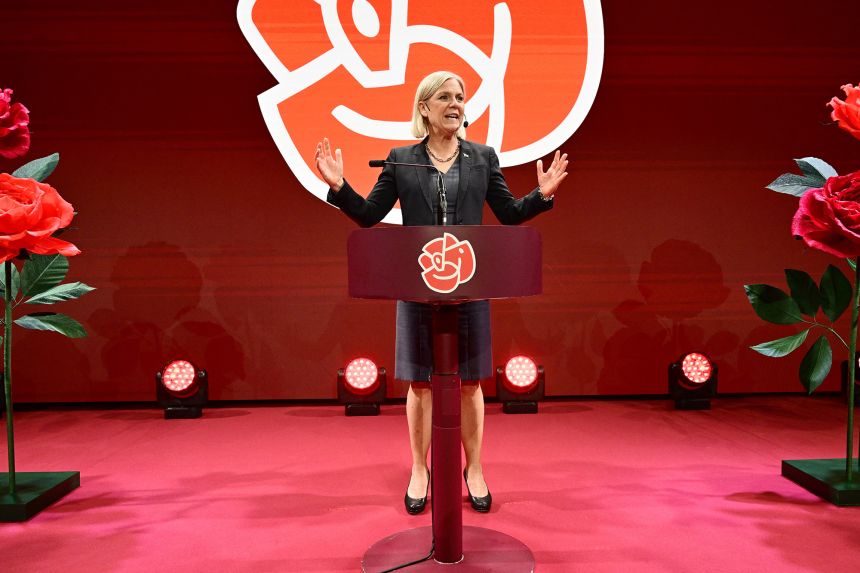
Sweden has entered a period of intense political maneuvering as party leaders begin high-stakes coalition talks after a cliffhanger election.
While final results—including overseas and late-arriving ballots—won’t be officially certified until later in the week, preliminary counts with 95% of votes tallied show Magdalena Andersson and the Social Democrats leading a narrow center-left bloc holding 176 seats, narrowly edging out the right-leaning parties at 173.
The Landscape After the Vote
The far-right Sweden Democrats, who harbored hopes of entering government for the first time, appeared pushed out of the immediate power equation after losing support. However, their hardline stance on issues like crime, integration, and immigration has heavily shaped the political mainstream, influencing even center-left policies.
Both Andersson and outgoing Prime Minister Ulf Kristersson of the Moderates have indicated they are exploring all viable coalition pathways. Following a tense election night, Social Democrat leaders convened at party headquarters in Stockholm on Monday, calling for Kristersson’s resignation.
Social Democrat spokesperson Tobias Baudin didn’t mince words, telling Swedish broadcaster SVT: “Now the voters have had their say, and they have given him a failing grade for himself and his government… If he doesn’t resign, he will be removed.”
Key Hurdles: The Left vs. Center Dilemma
Forming a stable administration will not be straightforward. A central question facing the center-left bloc is whether they can bridge deep ideological divides—specifically regarding the Left party (Vänsterpartiet), which the Centre Party has historically ruled out working with.
The Centre Party has insisted that any coalition must exhibit a “desire for political stability” and a “clear center-right character” free of “fringe politics.” Meanwhile, Social Democrat veteran Morgan Johansson called the Centre Party’s framing a positive step, emphasizing that avoiding a political deadlock and preventing a snap election remains a top priority.
On the other side of the aisle, Kristersson is keeping his options open despite the setback. Acknowledging the complicated path ahead, Kristersson warned reporters: “If all the red lines remain then Sweden won’t have a government at all. I plan to pursue a number of possibilities that may exist.” Both the Liberals and Christian Democrats have maintained strict red lines, ruling out any cooperation with the Social Democrats.
What Happens Next?
Final Results: Overseas votes are set to be counted by Wednesday, with final certification expected over the weekend.
Parliamentary Timeline: The newly elected Riksdag is scheduled to convene for the first time on September 28.
The Prime Minister Vote: The speaker can propose a prime minister candidate starting September 29. Under Swedish law, if a candidate fails four successive parliamentary votes, a snap election is automatically triggered.
Political analysts note that forming a government could take anywhere from weeks to months, echoing the grueling 134-day deadlock seen following the 2018 elections. Whether compromise can be struck across traditional block lines before the clock runs out remains to be seen.